
For most people, breathing in a few bacteria or encountering a respiratory virus is something the body can usually handle.
For someone living with Primary Ciliary Dyskinesia (PCD), the situation can be different.
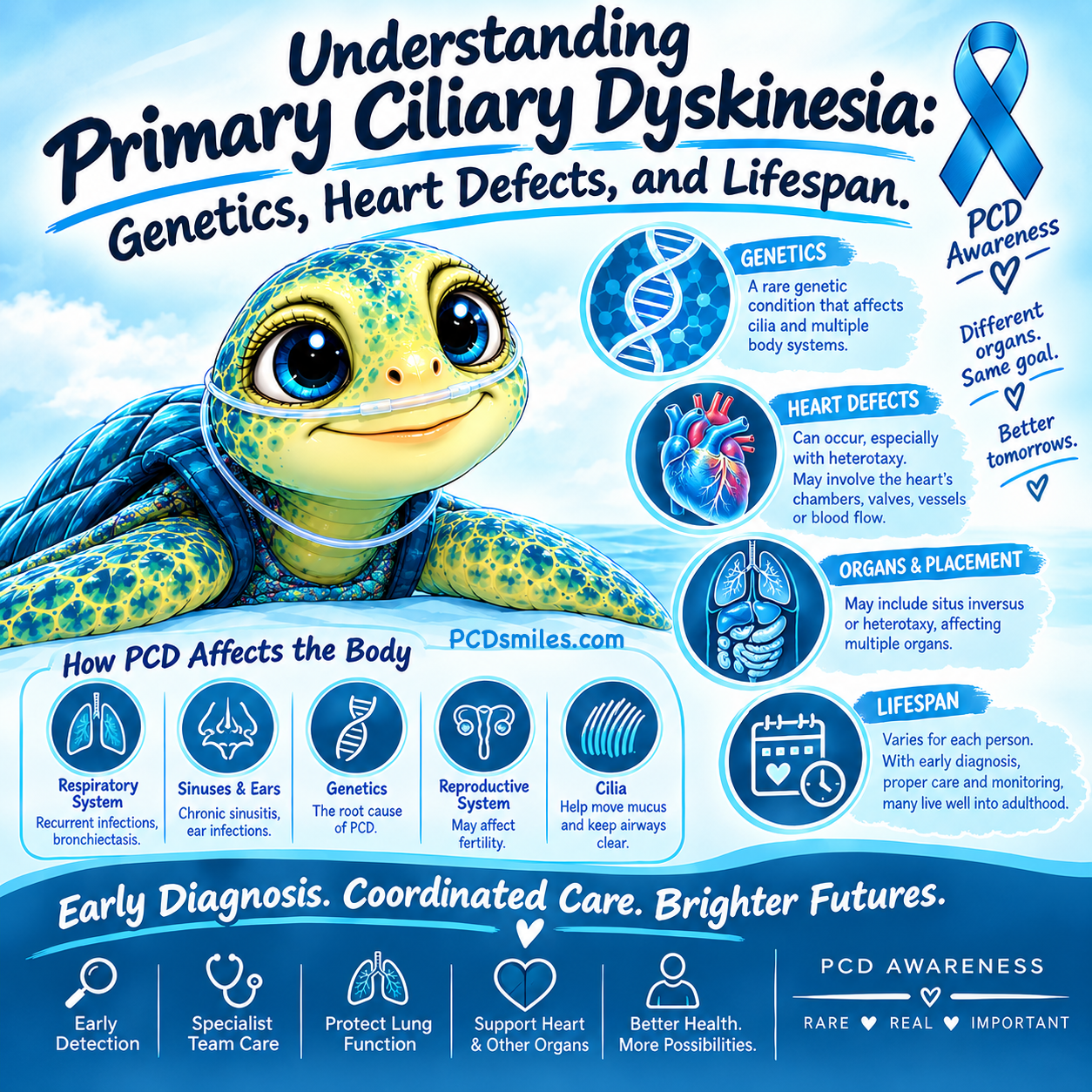
PCD is a rare genetic condition that affects motile cilia—microscopic structures that normally help move mucus, bacteria, and debris out of the respiratory tract.
When those cilia don't work properly, the body's natural mucus-clearance system is impaired.
Mucus can remain trapped in the airways, creating an environment where bacteria can persist and infections can develop. Over time, repeated infections and inflammation can contribute to bronchiectasis, permanent damage and widening of the airways.
That is why infection prevention
matters so much in PCD.
One important part of that conversation is cross-contamination: the transfer of potentially harmful microorganisms from one person, surface, object, or piece of equipment to another.
For someone whose lungs already have difficulty clearing mucus and bacteria, reducing avoidable exposure can be an important part of protecting respiratory health.
Why Infection Can Be More Complicated in PCD
The lungs are constantly exposed to microorganisms from the environment.
Healthy airways have several defenses against these organisms, including mucus, immune responses, and functioning cilia that continuously move mucus toward the throat.
PCD disrupts one of those important defenses.
As a result, bacteria that enter the airways may be more difficult to clear.
Respiratory infections can trigger increased coughing, mucus production, inflammation, and worsening lung function. Some infections may require oral or intravenous antibiotics and additional airway-clearance treatments.
Over time, repeated infections can contribute to further structural lung damage.
This creates a difficult cycle:
Impaired cilia → mucus retention → infection and inflammation → airway damage → even more difficulty clearing mucus.
Reducing unnecessary exposure to potentially harmful pathogens is one way to help reduce some avoidable risks
Which Organisms Matter?
People with PCD can develop respiratory infections caused by a variety of bacteria and viruses.
Some organisms that may be encountered include:
Pseudomonas aeruginosa
Pseudomonas is an important respiratory pathogen in people with bronchiectasis, including some individuals with PCD.
Once established in damaged airways, it can be difficult to eliminate and may become a recurring or chronic infection.
Because of this, identifying new Pseudomonas infections and managing them appropriately is an important part of PCD care.
Staphylococcus aureus
Staphylococcus aureus is commonly found on human skin and in the nose.
Although its presence does not automatically mean someone will develop a lung infection, it can cause respiratory disease when it reaches vulnerable airways.
Respiratory Viruses
Viruses such as influenza, RSV, COVID-19, and other respiratory viruses can also be important.
A viral infection can increase inflammation and mucus production and may make airway clearance more difficult. In some cases, viral infections can also be followed by secondary bacterial infections.
This is one reason respiratory-virus prevention can be particularly important for people with chronic lung disease.
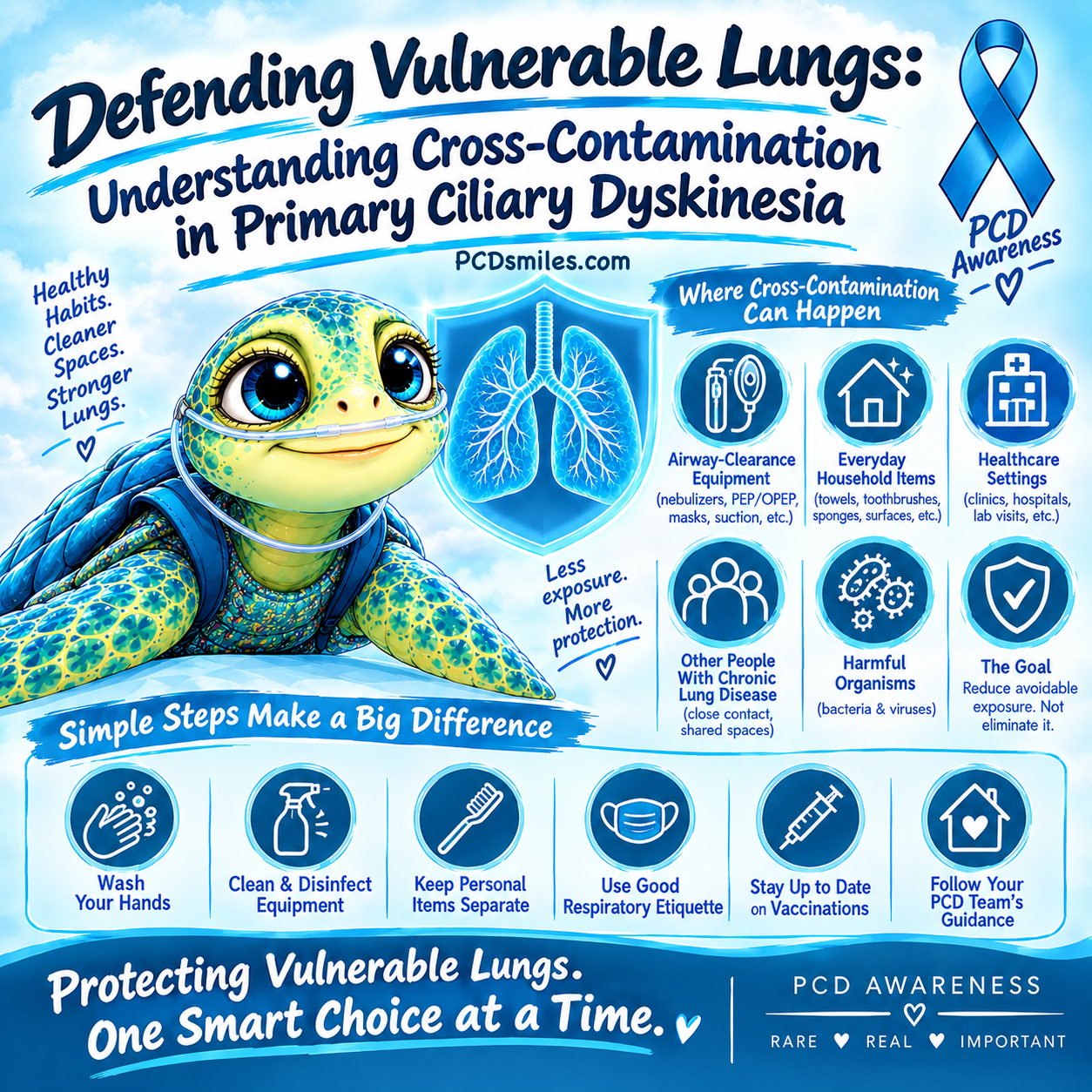
Where Can Cross-Contamination Happen?
Cross-contamination doesn't necessarily mean someone has done something wrong.
Microorganisms are everywhere.
The goal is not to create a completely sterile environment—which isn't possible—but to reduce avoidable opportunities for harmful organisms to reach vulnerable airways.
Several situations deserve particular attention.
Airway-Clearance and Respiratory Equipment
Many people with PCD perform airway-clearance treatments every day.
Depending on the person's treatment plan, equipment may include:
- Nebulizers
- PEP or OPEP devices
- Masks or mouthpieces
- Suction equipment
- Other respiratory-therapy devices
If equipment isn't cleaned, disinfected, and dried according to the manufacturer's instructions and the patient's medical team's recommendations, microorganisms can potentially remain on the equipment.
That is why equipment hygiene is an important part of respiratory care.
The exact cleaning and disinfection method varies by device.
Patients should follow the instructions supplied with their equipment and those provided by their healthcare team rather than assuming that one cleaning method works for every device.
One simple principle applies across the board:
Clean equipment needs to be completely dry before it is stored.
Everyday Household Items
The home isn't a sterile environment—and it doesn't need to be.
But some damp environments can support bacterial growth.
Items that remain wet for long periods, such as toothbrushes, washcloths, towels, sponges, and some bathroom surfaces, deserve routine attention.
Good general hygiene practices include:
- Washing hands regularly
- Allowing toothbrushes to dry between uses
- Replacing toothbrushes regularly and after certain illnesses when recommended
- Cleaning bathroom surfaces
- Avoiding prolonged dampness
- Following appropriate cleaning practices for respiratory equipment
There have been individual reports of environmental sources being associated with recurrent infections in people with chronic lung disease, including PCD.
However, a single case report does not mean that a particular household item is a common source of infection for everyone with PCD.
The practical takeaway is simple:
Good hygiene and appropriate cleaning can reduce avoidable exposure without turning the home into a laboratory.
Healthcare Settings
People with PCD often spend more time in healthcare environments than the general population.
Pulmonology appointments, respiratory testing, imaging, laboratory visits, hospitalizations, and other medical appointments may all be part of lifelong care.
Healthcare environments also bring together people with different respiratory infections and chronic lung diseases.
For that reason, infection-control practices are important.
Depending on the setting and current respiratory-virus activity, precautions may include:
- Hand hygiene
- Appropriate masking
- Respiratory etiquette
- Avoiding unnecessary close contact with people who are actively ill
- Following clinic infection-control policies
PCD centers may also use strategies to reduce contact between patients with chronic respiratory infections.
This is particularly important when patients may carry organisms that could potentially be transmitted to another person with significant lung disease.
Contact With Other People With Chronic Lung Disease
People with PCD often develop strong relationships with others who understand life with a rare lung disease.
That community can be incredibly valuable.
But there is an important distinction between emotional connection and physical exposure.
Some bacteria can potentially spread between people with chronic respiratory diseases.
For that reason, specialized PCD programs may recommend infection-control measures when patients are physically together.
This doesn't mean people with PCD need to isolate themselves from one another.
It means being thoughtful about how and where people gather, particularly when someone has an active respiratory infection or is known to carry a potentially transmissible organism.
Virtual support groups and online communities can also provide opportunities for connection without creating the same physical exposure.
Cross-Contamination Isn't the Same as Catching Every Infection
It's important not to let the conversation about cross-contamination create unnecessary fear.
People with PCD will encounter microorganisms every day.
They cannot—and should not—try to eliminate every possible exposure.
The goal is risk reduction, not complete avoidance.
A person with PCD can still go to school, work, restaurants, social events, travel, and participate in everyday life.
The emphasis should be on practical precautions that have a reasonable benefit:
Clean your equipment.
Wash your hands.
Keep respiratory devices properly maintained.
Avoid sharing personal respiratory equipment.
Stay current with recommended vaccinations.
Take reasonable precautions around people who are actively sick.
Follow the infection-control recommendations of your PCD team.
These measures don't guarantee that someone won't become infected.
They simply reduce some avoidable risks.
Protecting the Lungs Is a Daily Job
For someone with PCD, infection prevention is only one piece of the larger picture.
Protecting lung health also means maintaining the individual's prescribed airway-clearance routine, monitoring respiratory symptoms, obtaining cultures when clinically appropriate, treating infections promptly, and keeping regular appointments with the healthcare team.
Airway clearance is particularly important because it helps compensate for the cilia's inability to perform their normal mucus-clearing function.
The goal is to keep mucus moving and prevent it from becoming a place where bacteria can persist.
What Can Family Members and Friends Do?
People around someone with PCD can help, too.
You don't need to become an infection-control expert.
Simple things can help reduce unnecessary exposure:
- Wash your hands regularly.
- Don't visit when you're actively sick if it can be avoided.
- Practice good respiratory etiquette.
- Don't share personal items that come into contact with the mouth.
- Don't share respiratory equipment.
- Keep commonly touched surfaces reasonably clean.
- Respect the precautions a person with PCD chooses to take.
That last one matters.
Someone with PCD may choose to wear a mask, avoid certain environments, or ask people not to visit when they're sick.
Those choices may simply be part of protecting lungs that already have a harder time clearing respiratory secretions.
Protecting Vulnerable Lungs Without Living in Fear
PCD can make respiratory infections more consequential, but infection prevention shouldn't mean living in a bubble.
The goal is to find a balance between living life and protecting lung health.
People with PCD deserve to go to school, build careers, travel, spend time with friends and family, attend events, and enjoy their lives.
At the same time, they deserve healthcare providers, family members, friends, and communities who understand why certain precautions matter.
Cross-contamination is just one piece of the PCD puzzle.
But it is an important one.
Because when the body's natural mucus-clearing system isn't working properly, every reasonable step to reduce preventable exposure can become another layer of protection for vulnerable lungs.
PCD doesn't mean living in fear of germs. It means understanding the risks, taking practical precautions, and giving vulnerable lungs every possible advantage.
Be sure to join us tomorrow for another conversation about primary ciliary dyskinesia.
Join our Facebook group Turtle Talk Café today.
We have several ways that you can donate to PCD Smiles;
- Visit Smile E. Turtle's Amazon Wishlist
- For more information on how you can donate, please visit our "Donation" page to check out our "Do & Don't policies.
- Or sponsor a PCD Smiles cheer package today!
- To shop for your “Official” turtle care ribbon gear today, visit PCD Style
Thank you for your consideration!
Medical Disclaimer
This article is intended for general educational and informational purposes only and is not a substitute for professional medical advice, diagnosis, or treatment. Infection risks and appropriate prevention strategies can vary considerably between people with PCD based on their lung health, respiratory cultures, treatments, age, and other medical conditions.
This article is for educational purposes and does not establish that over-thinning mucus causes increased infection risk in people with PCD. Responses to airway-clearance and mucoactive therapies vary. Any changes to prescribed treatments should be discussed with a healthcare professional familiar with PCD.
Cleaning and disinfection recommendations for respiratory equipment can also vary by device and manufacturer. Always follow the instructions provided by your healthcare team and equipment manufacturer.
Do not start, stop, or change medications, airway-clearance treatments, infection-control practices, or other aspects of your medical care based solely on this article. If you have PCD and are concerned about an infection, worsening respiratory symptoms, or possible exposure to a pathogen, contact your PCD or respiratory healthcare team for individualized guidance.
If you are experiencing severe or rapidly worsening breathing difficulties or another medical emergency, seek urgent medical attention.