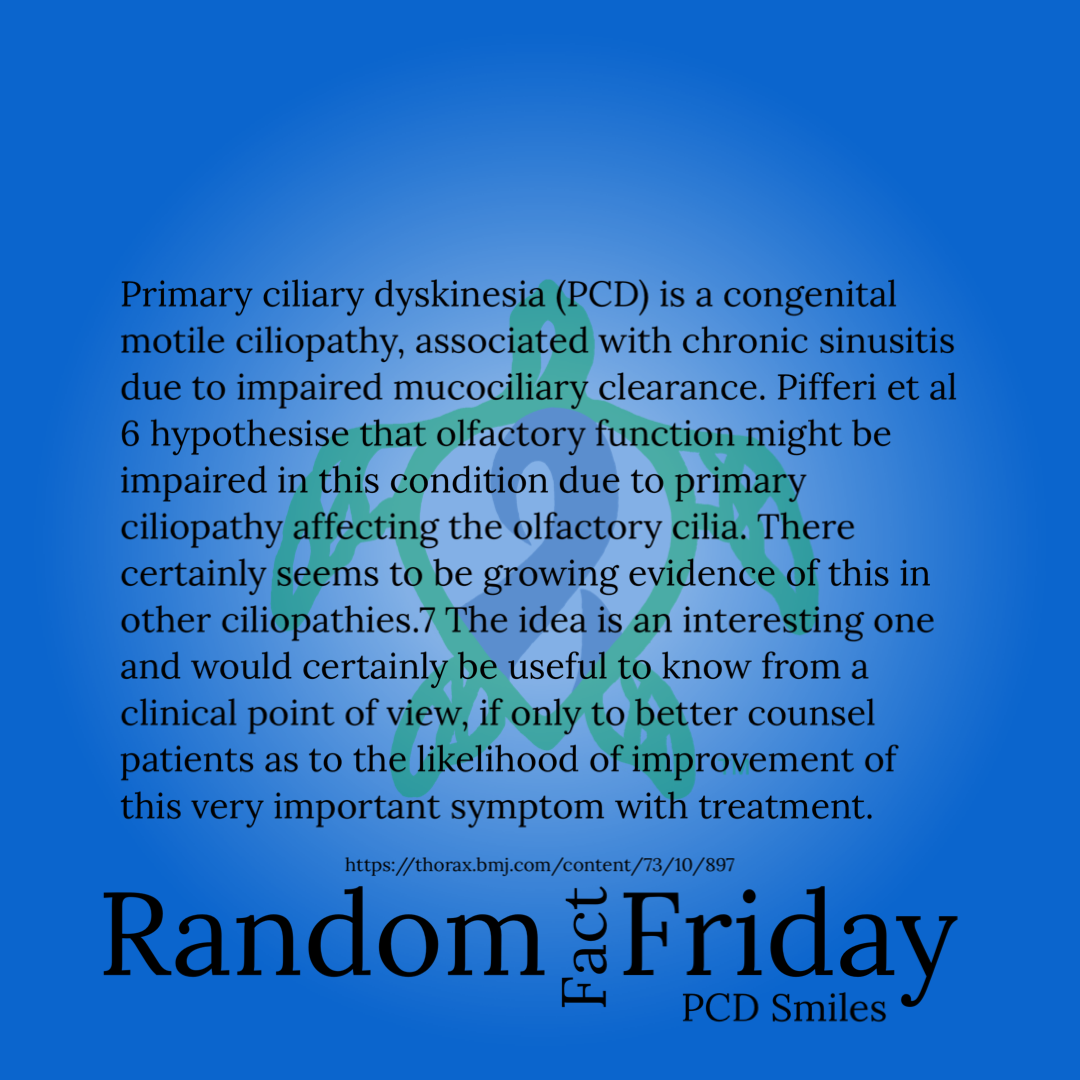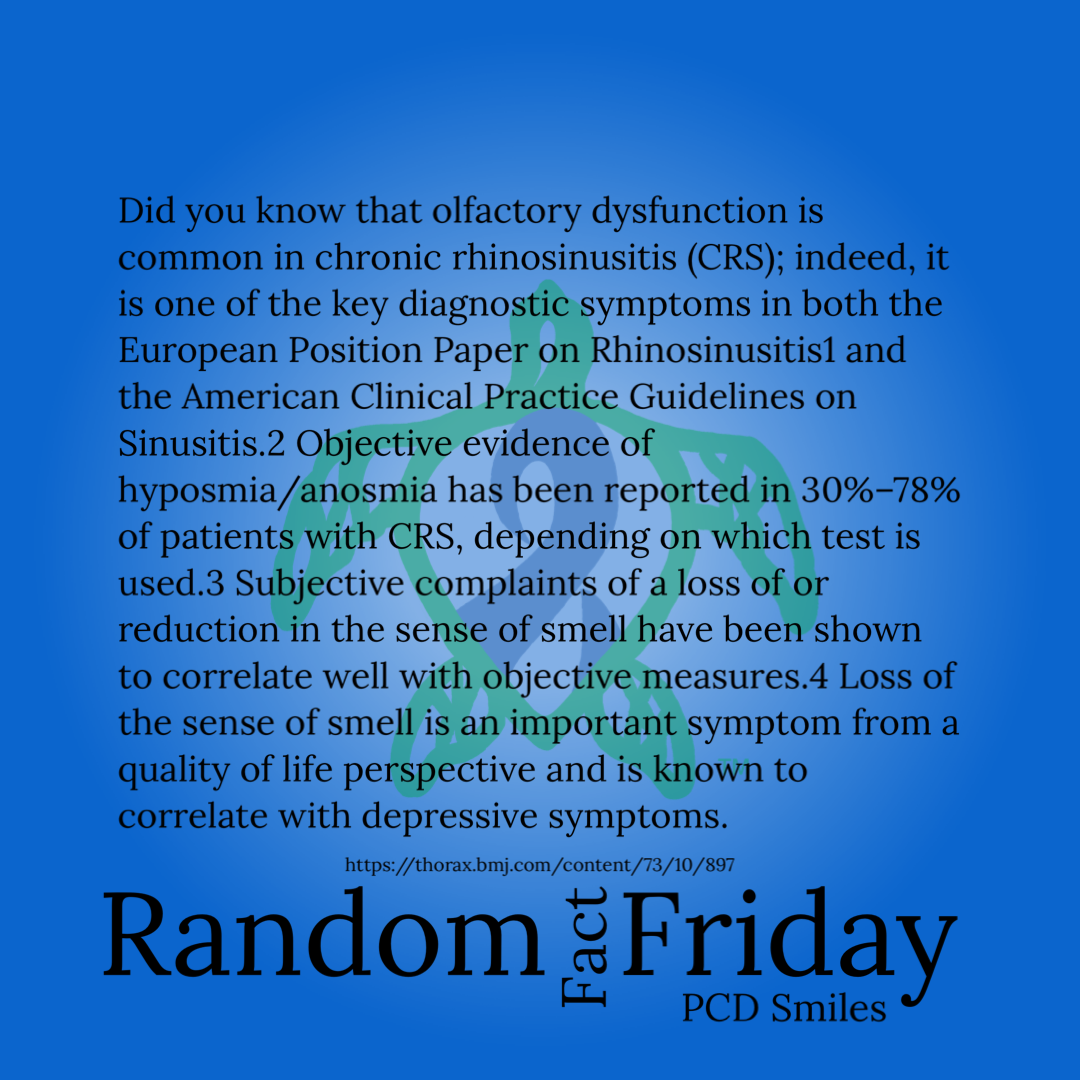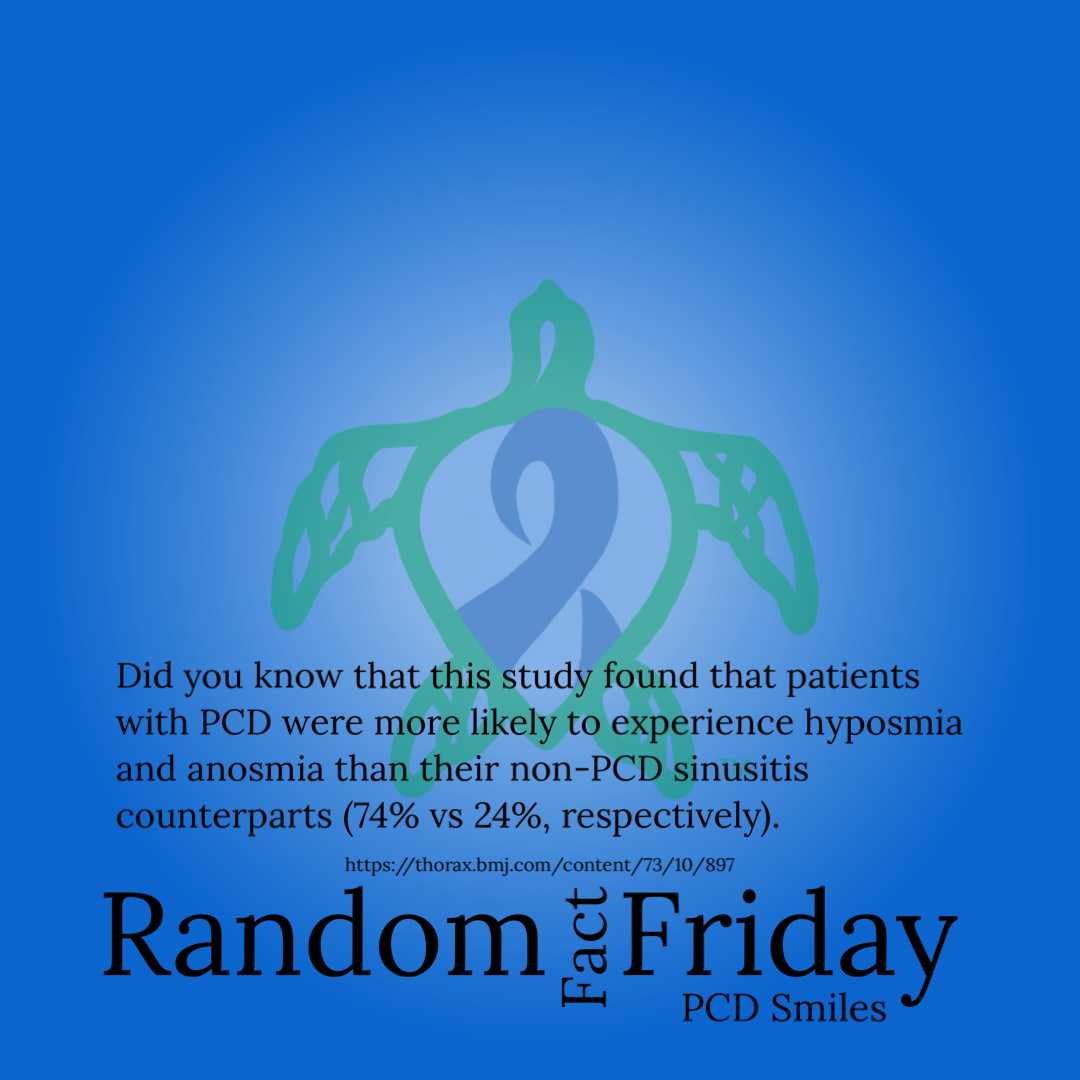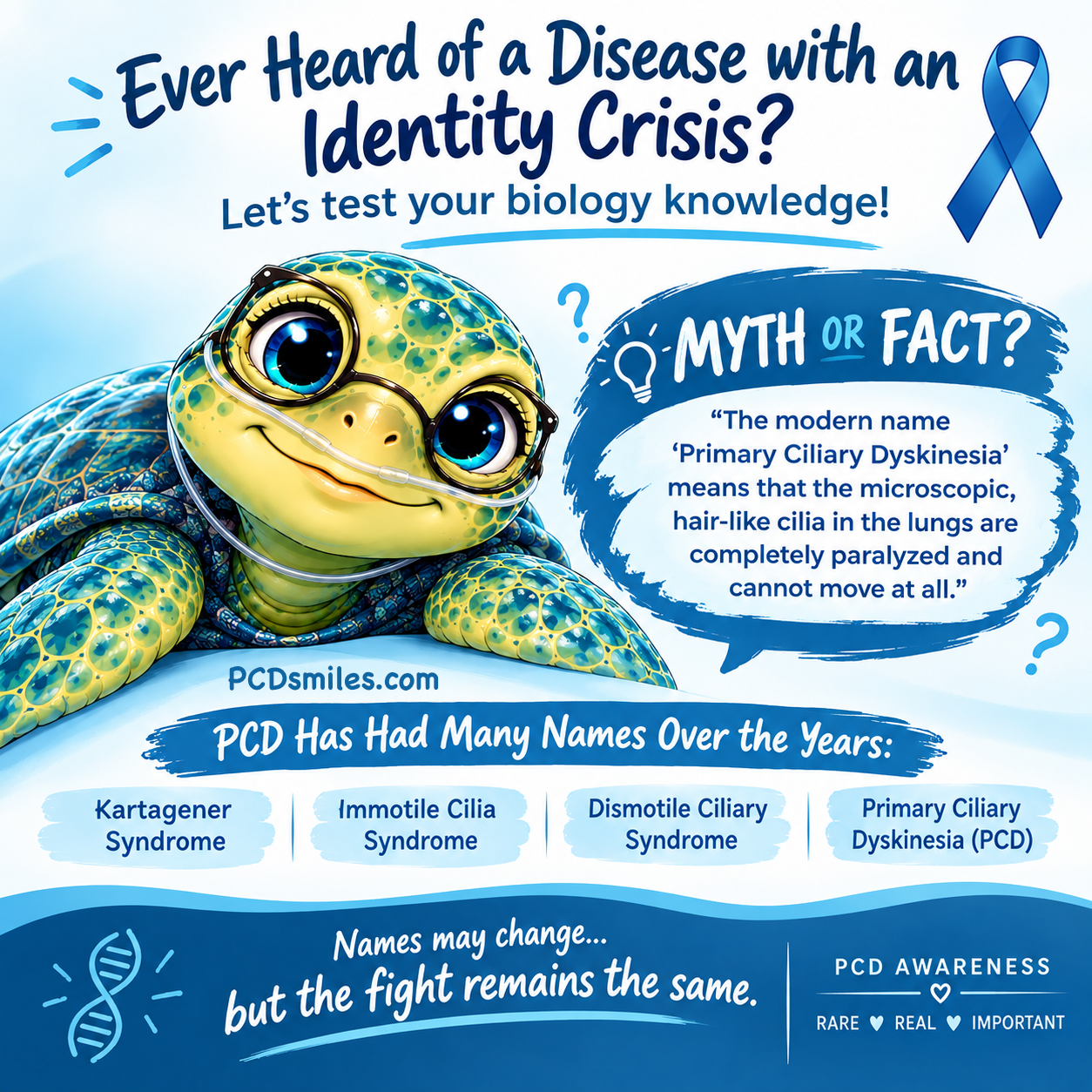


When most people hear Primary Ciliary Dyskinesia (PCD), they think about the lungs. But PCD can affect another important part of the respiratory system: the sinuses.
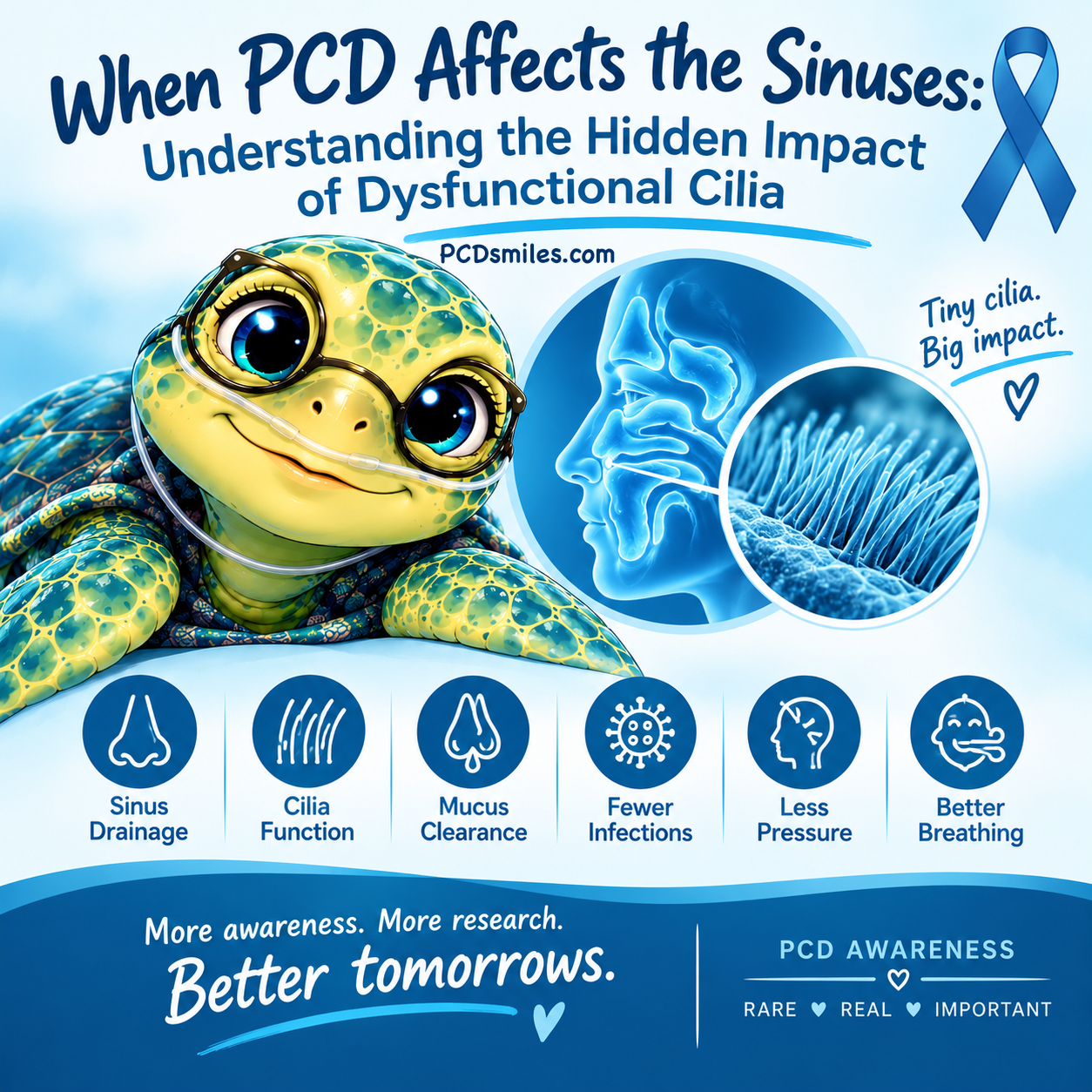
Inside the nose and sinuses are millions of microscopic, hair-like structures called cilia. They normally work together to move mucus, trapped particles, and germs toward areas where they can be cleared. In PCD, these cilia may be
missing, shortened, or unable to move properly.
When that microscopic cleaning system doesn't work, mucus can become trapped inside the sinuses. And that can create a chain reaction of congestion, inflammation, infections, pressure, and other problems.
The Sinuses: Your Body's Built-In Drainage System
The sinuses are air-filled spaces located around the nose, eyes, cheeks, and forehead. They are connected to the nasal passages and produce mucus that helps trap particles and keep the respiratory tract functioning properly.
Normally, cilia help move that mucus toward the nasal passages so it can drain.
Think of the cilia as a tiny conveyor belt.
When they're working properly, mucus keeps moving.
With PCD, that conveyor belt doesn't function normally.
Instead, mucus can stay trapped inside the sinuses, making it easier for inflammation and infection to develop.
What Happens When Mucus Gets Trapped?
Because the cilia cannot effectively clear mucus, people with PCD can experience chronic sinus problems.
Trapped mucus can contribute to:
- Chronic nasal congestion — mucus buildup can make it difficult to breathe comfortably through the nose.
- Frequent sinus infections — retained mucus can contribute to an environment where bacteria and other microorganisms can persist.
- Inflammation — ongoing mucus retention and infection can contribute to inflammation of the sinus passages.
- Pressure and facial pain — inflammation and congestion can create pressure around the forehead, cheeks, eyes, and nose and may contribute to headaches.
- Reduced sense of smell — inflammation, congestion, and mucus can interfere with the ability to detect odors.
- Persistent drainage problems — when mucus cannot move normally, the sinuses may struggle to clear their contents.
For someone living with PCD, sinus symptoms aren't necessarily just an occasional cold or seasonal problem. The underlying problem with ciliary movement is present every day.
PCD and Chronic Sinusitis
One of the important characteristics of PCD is that sinus problems can become persistent or recurrent.
Instead of mucus being continuously transported out of the sinuses, impaired ciliary movement allows secretions to remain in place.
That can create a cycle:
Impaired ciliary movement → mucus retention → inflammation → infection → more inflammation → continued sinus problems
This helps explain why someone with PCD may experience sinus symptoms over and over again.
It's More Than a Stuffy Nose
Sinus disease associated with PCD can affect much more than nasal breathing.
Persistent congestion and inflammation may contribute to:
Pressure and headaches
Inflamed or congested sinus passages can produce pressure around the forehead, cheeks, nose, and eyes. Some people may experience headaches or a feeling of heaviness in the face.
Changes in smell
When mucus and inflammation interfere with the nasal passages, the ability to detect odors can be reduced.
Ear problems
The nose and sinuses are closely connected to the middle ear through the Eustachian tubes. Problems with mucus clearance in this region can contribute to ear-related complications, including fluid buildup and changes in hearing.
Symptoms that fluctuate with the environment
Colds, allergies, seasonal changes, and cold weather may make existing sinus symptoms feel worse. For someone whose cilia already struggle to clear mucus, an additional increase in mucus or inflammation can make the problem more noticeable.
Why Healthy Cilia Matter
The difference between healthy cilia and PCD cilia can be difficult to see from the outside, but the impact can be significant.
Healthy cilia:
- Move mucus through the sinuses.
- Help remove trapped particles and germs.
- Support normal sinus drainage.
PCD cilia:
- May be absent, shortened, or move abnormally.
- Cannot effectively transport mucus.
- Allow mucus to remain trapped.
- Can contribute to ongoing inflammation and recurrent infections.
The problem isn't simply how much mucus the body produces.
It's also about the body's ability to move that mucus where it needs to go.
What Can Help?
Managing sinus problems in PCD is individualized and should be guided by a healthcare team familiar with the condition.
The approaches include:
- Regular sinus rinses, using sterile or distilled water as appropriate.
- Staying hydrated, which can help support mucus management.
- Managing inflammation according to recommendations from a healthcare professional.
- Maintaining airway clearance, because airway clearance can also play an important role in managing respiratory secretions.
- Regular follow-up with an ENT and pulmonologist to monitor ongoing problems and determine appropriate treatment.
The goal isn't simply to treat a sinus infection when it happens. It's also to help manage the underlying problem of impaired mucus clearance.
The Bigger Picture
PCD is a genetic condition involving dysfunctional cilia, and those cilia aren't found only in the lungs.
In the sinuses, their job is equally important: moving mucus and helping keep the passages clear.
When that movement is impaired, mucus can become trapped, infections can recur, inflammation can persist, and everyday symptoms such as congestion, facial pressure, and reduced smell can become part of life with PCD.
That is why PCD-related sinus disease deserves attention.
It's not "just sinus problems."
For someone with PCD, the underlying problem is microscopic—but the impact can be very real.
Small cilia. Big impact.
Understanding how PCD affects the sinuses can help patients, families, and healthcare providers recognize that chronic sinus disease may be part of a much larger picture.
More awareness. More research. Better treatments. Brighter tomorrows. 💙🐢
Be sure to join us tomorrow for another conversation about primary ciliary dyskinesia.
Join our Facebook group Turtle Talk Café today.
We have several ways that you can donate to PCD Smiles;
- Visit Smile E. Turtle's Amazon Wishlist
- For more information on how you can donate, please visit our "Donation" page to check out our "Do & Don't policies.
- Or sponsor a PCD Smiles cheer package today!
- To shop for your “Official” turtle care ribbon gear today, visit PCD Style
Thank you for your consideration!
Medical Disclaimer
This article is intended for general educational and informational purposes only and is not a substitute for professional medical advice, diagnosis, or treatment. Infection risks and appropriate prevention strategies can vary considerably between people with PCD based on their lung health, respiratory cultures, treatments, age, and other medical conditions.
Cleaning and disinfection recommendations for respiratory equipment can also vary by device and manufacturer. Always follow the instructions provided by your healthcare team and equipment manufacturer.
Do not start, stop, or change medications, airway-clearance treatments, infection-control practices, or other aspects of your medical care based solely on this article. If you have PCD and are concerned about an infection, worsening respiratory symptoms, or possible exposure to a pathogen, contact your PCD or respiratory healthcare team for individualized guidance.
If you are experiencing severe or rapidly worsening breathing difficulties or another medical emergency, seek urgent medical attention.