

For most of us, breathing is something we never have to think about.
We inhale. We exhale. We go about our day.
For someone living with Primary Ciliary Dyskinesia (PCD), breathing can become anything but automatic.
PCD is a rare genetic disorder that affects motile cilia—microscopic structures that normally help move mucus, bacteria, and other particles out of the respiratory tract. When those cilia don't function properly, mucus can remain trapped in the lungs, creating an environment where infections can take hold.
Over years, repeated infections and chronic inflammation can contribute to bronchiectasis, permanent structural damage to the airways. For some people with PCD, lung disease can eventually become severe enough to cause
respiratory failure.
When airway clearance, medications, antibiotics, and other treatments can no longer adequately control advanced lung disease, lung transplantation may become a treatment option.
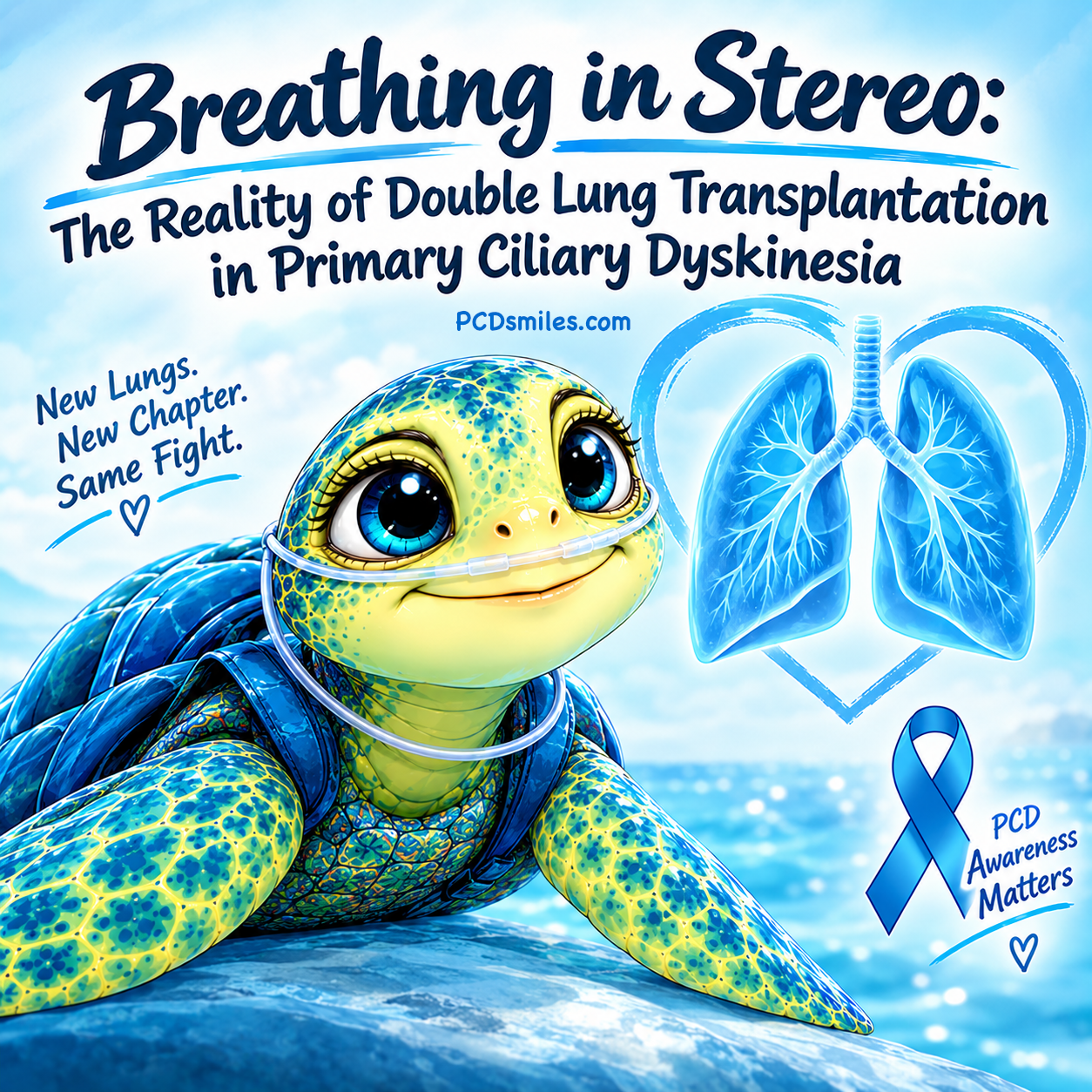
For some people with end-stage PCD lung disease, that means a bilateral—or double—lung transplant.
Why Are Both Lungs Often Replaced?
PCD affects the cilia throughout the respiratory tract. The disease doesn't simply affect one isolated area of lung tissue.
By the time someone reaches the point of needing transplantation, both lungs may have extensive bronchiectasis, chronic infection, scarring, and other structural changes.
For this reason, bilateral lung transplantation is generally the approach used for people with PCD who undergo lung transplantation, rather than leaving a severely diseased native lung behind.
There is an important reason for this.
After transplantation, patients must take lifelong immunosuppressive medications to prevent their immune system from attacking the donor lungs. These medications also reduce the body's ability to fight infections.
Leaving behind a severely damaged, chronically infected native lung could create additional infectious concerns.
The exact transplant approach, however, is individualized. Decisions are made by specialized transplant teams based on the person's overall health, anatomy, infection history, previous surgeries, and other factors
.
The Journey to a Lung Transplant
Receiving a transplant isn't simply a matter of being placed on a waiting list.
The journey begins with an extensive evaluation.
The Evaluation
A transplant center performs a comprehensive assessment to determine whether transplantation is appropriate and whether the individual is medically prepared to undergo a major operation and the demanding recovery that follows.
Evaluation may include assessment of:
- Lung function and respiratory status
- Heart function
- Kidney and liver function
- Nutritional status
- Infection history
- Bone health
- Physical conditioning
- Previous surgeries
- Blood type and other matching factors
- Psychosocial support and readiness
- Ability to manage the complex medical regimen required after transplant
The purpose isn't simply to determine whether someone is sick enough for a transplant.
The team also needs to determine whether transplantation is likely to provide meaningful benefit and whether the individual can safely navigate life after the operation.
The Waiting Game
Once someone is accepted for transplantation and placed on the appropriate transplant waiting list, the waiting begins.
There is no guaranteed timeline.
Donor lungs must be compatible with the recipient in important ways, including factors such as blood type, body size, and medical urgency. Geographic and logistical considerations also affect how quickly an organ can be offered.
For someone with PCD, previous chest surgeries, extensive lung disease, infection history, or unusual anatomy may add complexity to the transplant evaluation and surgical planning.
And while waiting, the patient continues to live with advanced lung disease.
Every infection, hospitalization, and decline in lung function can make the waiting period physically and emotionally exhausting.
The Surgery
A bilateral lung transplant is a major, highly complex operation.
During the procedure, surgeons remove the patient's diseased lungs and replace them with donor lungs.
The donor lungs must then be carefully connected to the recipient's:
- Airways
- Pulmonary blood vessels
- Other major structures involved in circulation
The operation can take many hours and requires a large multidisciplinary team.
When it is over, however, the transplant journey is far from finished.
In many ways, a completely different chapter is just beginning.
Life After a Double Lung Transplant
For someone who has spent years struggling to breathe, waking up after transplantation can be an extraordinary experience.
A breath that once required coughing, airway clearance, oxygen, or enormous effort may suddenly feel different.
Some transplant recipients describe being able to breathe deeply in a way they haven't experienced in years.
But there is an important distinction:
A lung transplant treats the end-stage lung disease. It does not cure PCD.
The donor lungs come from someone without PCD, so the cilia within those new lungs function normally.
But the genetic condition remains in the recipient's body.
That means PCD-related problems outside the transplanted lungs—including upper-airway disease involving the sinuses and ears—can continue.
This makes upper-airway care particularly important after transplantation.
The Sinus-Lung Connection
People with PCD can have significant chronic sinus disease because the cilia lining the upper respiratory tract are also affected.
After transplantation, the new lungs have functioning cilia, but the recipient's own sinus cilia still do not function normally.
Respiratory infections originating in the upper airways can therefore remain an important concern.
Post-transplant care may include careful attention to sinus health, respiratory symptoms, cultures, and infection prevention.
The transplant may provide new lungs.
But the rest of the respiratory tract still needs care.
A New Medical Routine
Life after transplant can bring tremendous improvements, but it also comes with lifelong responsibilities.
Immunosuppression
Recipients must take immunosuppressive medications for the rest of their lives.
These medications help prevent the immune system from attacking the donor lungs.
But there is a trade-off: suppressing the immune system increases vulnerability to infections and can create other long-term health risks.
Medication schedules must therefore be followed carefully, and regular blood testing is necessary to monitor drug levels and potential side effects.
Monitoring
Transplant recipients require close medical follow-up.
Depending on the transplant center and individual circumstances, monitoring can include:
- Pulmonary-function testing
- Home spirometry
- Blood tests
- Respiratory cultures
- Imaging
- Bronchoscopy when indicated
- Medication-level monitoring
- Regular transplant-clinic visits
The goal is to detect problems such as infection, rejection, or medication complications as early as possible.
Everyday Precautions
Life after transplant may also involve new precautions.
Patients may need to pay particular attention to:
- Food safety
- Hand hygiene
- Avoiding exposure to certain infections
- Environmental molds and fungi
- Soil and other sources of potentially harmful organisms
- Crowded environments during periods of high respiratory-virus activity
- Vaccination recommendations appropriate for transplant recipients
The specific precautions vary from person to person and should be guided by the transplant team.
Is a Lung Transplant a Cure?
No.
That distinction matters.
A double lung transplant can replace severely damaged lungs with healthy donor lungs, potentially dramatically improving breathing and quality of life.
But it does not correct the underlying genetic cause of PCD.
The recipient still has PCD.
They still require specialized medical care.
And they now have another lifelong condition to manage: living with transplanted organs and the immunosuppression required to protect them.
In other words, transplantation isn't an end to medical care.
It is a new chapter of medical care.
A Second Chance—and a New Responsibility
For someone with end-stage PCD lung disease, transplantation can represent something incredibly profound:
the possibility of breathing differently and living differently.
It may mean having enough energy to walk farther.
Returning to activities that once seemed impossible.
Spending time with family without every activity being dictated by breathlessness.
Planning for a future that once felt uncertain.
But behind every transplant is another human being—the donor—whose decision to give the gift of life made that possibility exist.
That is why organ donation matters.
Thousands of people wait for lifesaving organs, and every donated organ represents the possibility of another chapter in someone's story.
For people with PCD whose lungs have reached the point where conventional treatments are no longer enough, a double lung transplant may offer something they desperately need:
not a cure for PCD, but a chance for a new beginning.
PCD can make every breath a battle. For some, transplantation can change what that battle looks like. And behind every transplant is a gift that no words can truly measure—the gift of another person's decision to donate.
Be sure to join us tomorrow for another conversation about primary ciliary dyskinesia.
Join our Facebook group Turtle Talk Café today.
We have several ways that you can donate to PCD Smiles;
- Visit Smile E. Turtle's Amazon Wishlist
- For more information on how you can donate, please visit our "Donation" page to check out our "Do & Don't policies.
- Or sponsor a PCD Smiles cheer package today!
- To shop for your “Official” turtle care ribbon gear today, visit PCD Style
Thank you for your consideration!
Medical Disclaimer
This article is intended for general educational and informational purposes only and is not a substitute for professional medical advice, diagnosis, or treatment. Infection risks and appropriate prevention strategies can vary considerably between people with PCD based on their lung health, respiratory cultures, treatments, age, and other medical conditions.
This article is for educational purposes and does not establish that over-thinning mucus causes increased infection risk in people with PCD. Responses to airway-clearance and mucoactive therapies vary. Any changes to prescribed treatments should be discussed with a healthcare professional familiar with PCD.
Cleaning and disinfection recommendations for respiratory equipment can also vary by device and manufacturer. Always follow the instructions provided by your healthcare team and equipment manufacturer.
Do not start, stop, or change medications, airway-clearance treatments, infection-control practices, or other aspects of your medical care based solely on this article. If you have PCD and are concerned about an infection, worsening respiratory symptoms, or possible exposure to a pathogen, contact your PCD or respiratory healthcare team for individualized guidance.
If you are experiencing severe or rapidly worsening breathing difficulties or another medical emergency, seek urgent medical attention.