


When most people hear Primary Ciliary Dyskinesia (PCD), they think about the lungs, chronic cough, sinus problems, or recurrent respiratory infections. But PCD can affect much more than the respiratory system.
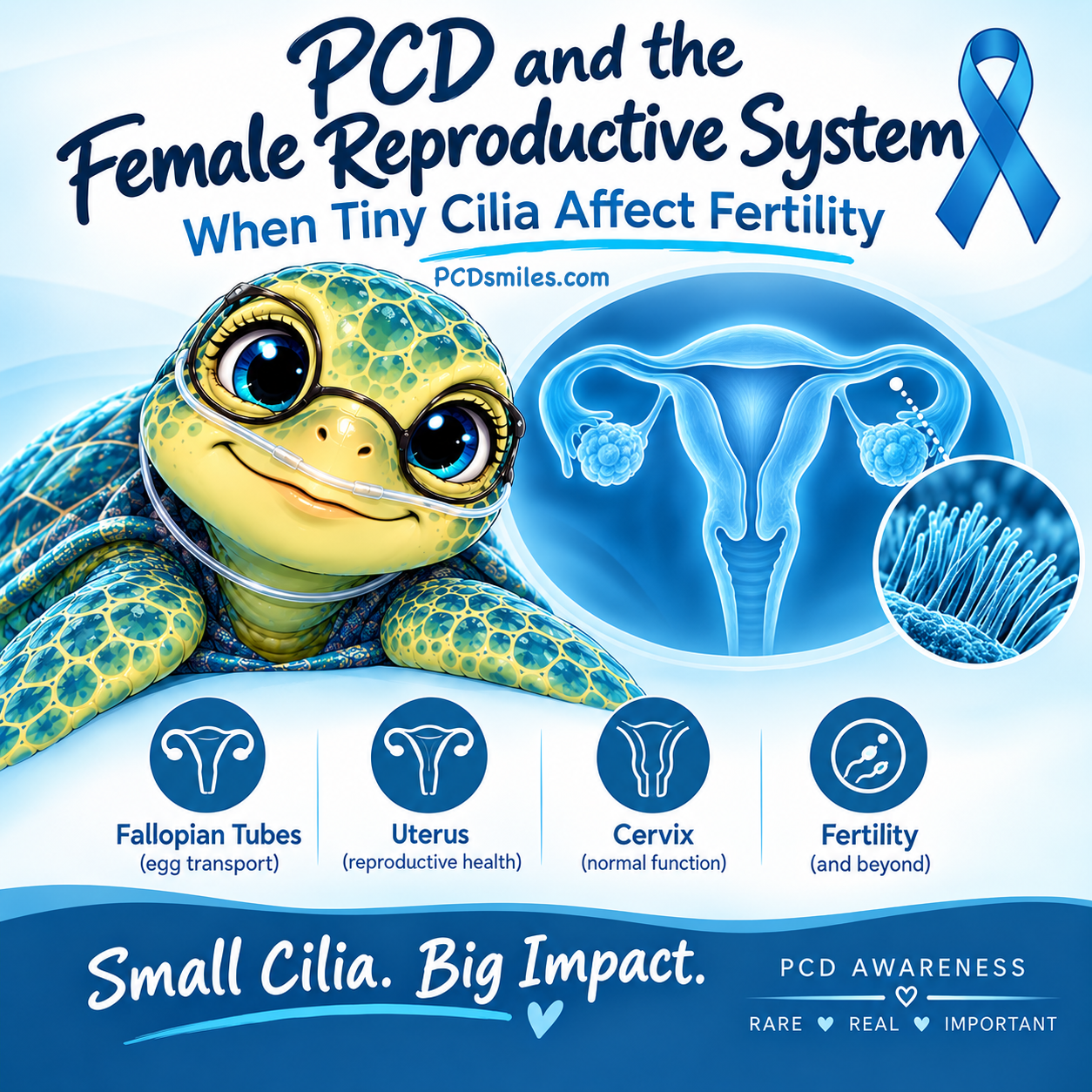
PCD affects cilia, the microscopic, hair-like structures that help move mucus, fluid, and other materials throughout the body. Cilia are also found throughout parts of the female reproductive tract, where their coordinated movement plays an important role in
moving the egg and supporting normal reproductive function.
When those cilia don't work properly, the effects can extend into fertility, pregnancy, and reproductive health.
The Role of Cilia in the Female Reproductive System
Cilia are found in structures including the fallopian tubes, uterus, and cervix.
The fallopian tubes are particularly important because they provide the pathway through which an egg travels.
Think of the cilia as a microscopic transportation system.
When they function normally, their movement helps move the egg and fluids through the reproductive tract.
With PCD, cilia may be absent, shortened, or move abnormally. Their movement may be slower, less coordinated, or ineffective.
This can interfere with the normal movement of an egg and contribute to reproductive complications.
Healthy cilia = healthier reproductive function.
How Can PCD Affect Fertility?
One potential reproductive effect of PCD is reduced fertility or infertility.
When cilia in the fallopian tubes don't move normally, the movement of the egg can be affected. This may make fertilization more difficult.
For some women with PCD, becoming pregnant may take longer than expected.
However, PCD does not mean that pregnancy is impossible.
Many women with PCD are able to conceive and have healthy pregnancies with appropriate care and support.
Every person's experience can be different.
Tubal Complications
Because ciliary movement is important for normal function of the fallopian tubes, PCD may be associated with tubal complications.
One potential complication to highlight is hydrosalpinx, a condition involving fluid buildup in a fallopian tube.
Tubal problems can interfere with normal reproductive function and may contribute to fertility challenges.
This is one reason reproductive health can be an important part of comprehensive PCD care.
PCD and Chronic Inflammation
PCD can also involve chronic inflammation.
Within the female reproductive system, inflammation may contribute to conditions affecting reproductive health, including inflammatory problems involving the uterus or surrounding reproductive structures.
Including conditions such as endometritis, or inflammation of the uterine lining.
Chronic illness and inflammation may also influence hormonal regulation, potentially affecting menstrual cycles and overall reproductive health.
Ovarian and Hormonal Issues
Other potential ovarian issues, including possible effects on egg quality and regular ovulation, while noting that more research is needed in this area.
Hormonal changes may also occur.
Inflammation and chronic illness can affect hormone regulation, which may contribute to:
- Changes in menstrual cycles
- Irregular periods
- Painful periods
- Changes in energy or mood
- Other aspects of reproductive health
Importantly, these symptoms can vary considerably from person to person.
Not every woman with PCD will experience the same reproductive complications.
Common Reproductive Symptoms
Several symptoms that women with PCD may experience, include:
- Infertility or subfertility — taking longer to conceive
- Irregular or painful periods — potentially associated with inflammation or hormonal changes
- Recurrent pelvic infections
- Pelvic pain or discomfort, particularly when inflammation or fluid buildup is present
- Hormonal changes that may affect menstrual cycles, energy, and mood
Some women may experience several of these symptoms, while others may have few or none.
That's why reproductive health should be considered individually rather than assuming that every woman with PCD will have the same experience.
PCD and Pregnancy
Having PCD does not automatically mean that a woman cannot become pregnant.
Fertility is possible, and many women with PCD conceive and have healthy pregnancies with appropriate care and support.
At the same time, pregnancy may require additional monitoring because PCD can involve multiple systems throughout the body.
Some notable potential pregnancy complications include:
- Preterm birth
- Infections
- Low birth weight
These risks don't mean that a healthy pregnancy is impossible. Rather, they highlight why preconception planning and appropriate monitoring can be important for women with PCD.
Preconception Planning Matters
For women with PCD who are considering pregnancy, planning ahead can help identify potential risks and allow their healthcare team to develop an appropriate care plan.
This may involve coordination between specialists such as:
- A fertility specialist
- An OB/GYN
- A pulmonologist
- Other healthcare professionals familiar with PCD
Because PCD can affect multiple body systems, having providers communicate with one another can be particularly valuable.
Specialized Care Can Make a Difference
PCD is a lifelong genetic condition, and reproductive health should be considered part of the bigger picture of PCD care.
Women experiencing difficulty conceiving, recurrent pelvic problems, menstrual changes, or other reproductive symptoms may benefit from discussing those concerns with their healthcare team.
Fertility testing and other evaluations can help identify potential contributing factors rather than assuming that PCD alone explains every reproductive problem.
Every Woman With PCD Is Different
One of the most important messages about PCD and female reproductive health is individual variation.
Some women with PCD may experience fertility challenges. Others may conceive without significant difficulty.
Some may experience menstrual or pelvic symptoms, while others may not.
A diagnosis of PCD doesn't tell the entire story of an individual's reproductive health.
Your PCD journey is your own.
Looking Beyond the Lungs
PCD is often recognized because of its respiratory symptoms, but the condition can affect cilia throughout the body.
In the female reproductive system, those microscopic structures can play an important role in the movement of eggs and fluids and in maintaining normal reproductive function.
When cilia don't work properly, the consequences can extend beyond breathing.
They may include fertility challenges, tubal complications, inflammation, menstrual changes, and pregnancy-related concerns.
But there is also an important message of hope:
PCD does not automatically mean infertility.
With greater awareness, appropriate fertility evaluation, preconception planning, and specialized care, women with PCD can have more information and support as they make decisions about their reproductive health.
Small Cilia. Big Impact.
PCD may be rare, but its effects can reach into some of the most important and personal parts of life.
Understanding the connection between PCD and the female reproductive system can help women recognize potential symptoms, start important conversations with their healthcare providers, and receive care that looks beyond the lungs.
PCD may be rare, but its effects can reach into many areas of life—including reproductive health.
More awareness. More research. Better care. Brighter futures.
Be sure to join us tomorrow for another conversation about primary ciliary dyskinesia.
Join our Facebook group Turtle Talk Café today.
We have several ways that you can donate to PCD Smiles;
- Visit Smile E. Turtle's Amazon Wishlist
- For more information on how you can donate, please visit our "Donation" page to check out our "Do & Don't policies.
- Or sponsor a PCD Smiles cheer package today!
- To shop for your “Official” turtle care ribbon gear today, visit PCD Style
Thank you for your consideration!
Medical Disclaimer
This article is intended for general educational and informational purposes only and is not a substitute for professional medical advice, diagnosis, or treatment. Infection risks and appropriate prevention strategies can vary considerably between people with PCD based on their lung health, respiratory cultures, treatments, age, and other medical conditions.
Cleaning and disinfection recommendations for respiratory equipment can also vary by device and manufacturer. Always follow the instructions provided by your healthcare team and equipment manufacturer.
Do not start, stop, or change medications, airway-clearance treatments, infection-control practices, or other aspects of your medical care based solely on this article. If you have PCD and are concerned about an infection, worsening respiratory symptoms, or possible exposure to a pathogen, contact your PCD or respiratory healthcare team for individualized guidance.
If you are experiencing severe or rapidly worsening breathing difficulties or another medical emergency, seek urgent medical attention.