
When most people hear Primary Ciliary Dyskinesia (PCD), they think about chronic cough, mucus, sinus infections, or bronchiectasis. Those are important parts of PCD—but the story actually begins much earlier, during embryonic development.
PCD can affect something most people never think about: which side of the body our organs develop on. This is because specialized cilia in the early embryo help establish the
body's left-right orientation. When those cilia don't function normally, the usual left-right signals can be disrupted, leading to different patterns of organ placement called situs abnormalities.
And this is one of the most fascinating connections between PCD and human development.
Cilia Have a Job Before We Ever Take Our First Breath
The cilia involved in PCD aren't limited to the lungs.
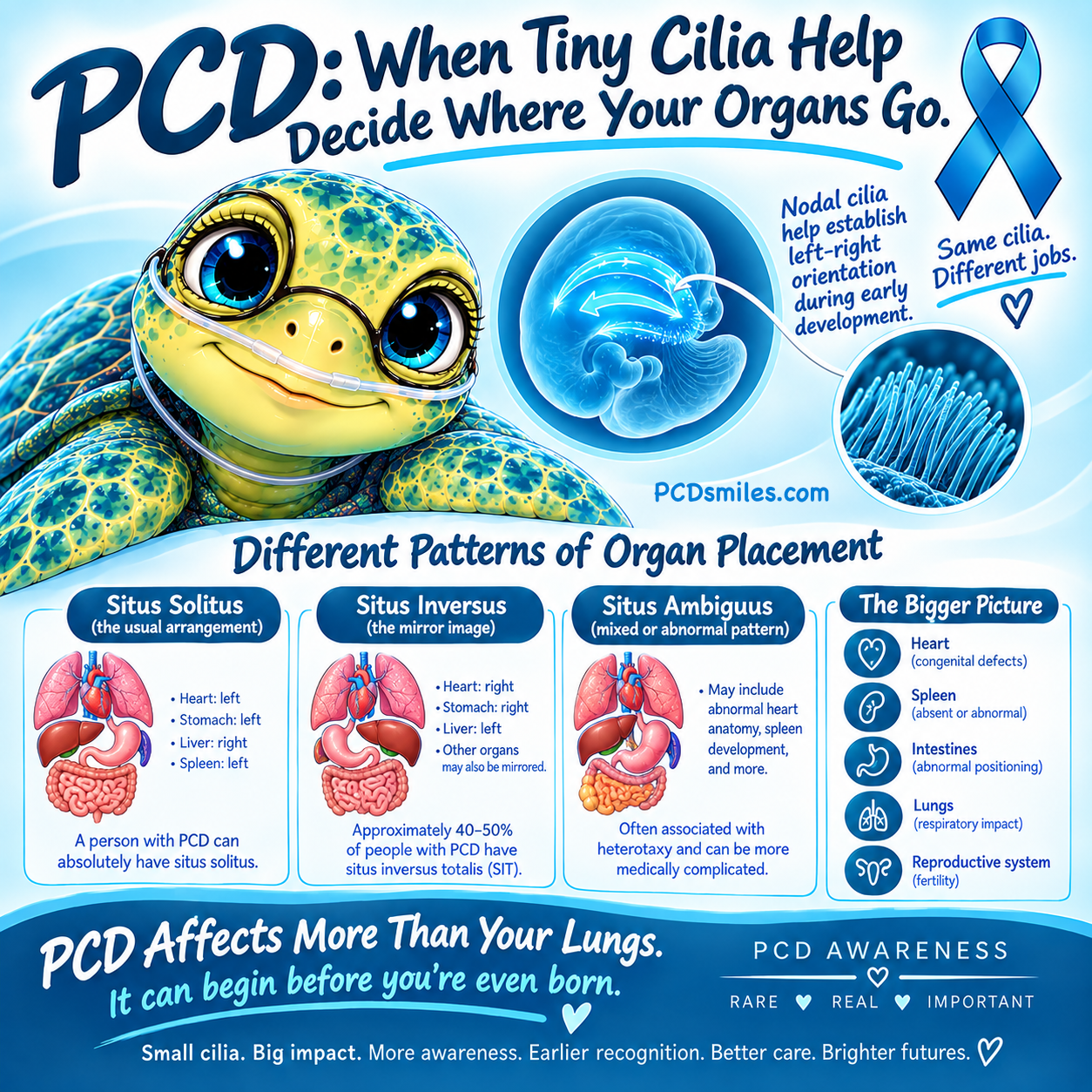
Very early in embryonic development, specialized nodal cilia are present in a structure called the embryonic node. Unlike the familiar beating cilia lining the respiratory tract, these cilia have a specialized rotational movement.
Their movement generates a leftward flow of fluid across the embryonic node. That flow helps initiate a molecular signaling cascade that establishes the body's left-right pattern.
That signaling helps determine where structures such as the heart, stomach, liver, spleen, and intestines will develop.
In other words, before the lungs ever need cilia to move mucus, specialized cilia are already helping organize the body.
When nodal cilia are dysfunctional, that left-right developmental process can be disrupted.
And that's where the different forms of situs come in.
Three Different Patterns of Organ Placement
1. Situs Solitus — the usual arrangement
Situs solitus refers to the typical left-right arrangement of the internal organs.
For example:
- The heart is predominantly on the left.
- The stomach is on the left.
- The liver is predominantly on the right.
- The spleen is on the left.
A person with PCD can absolutely have situs solitus. PCD does not mean that someone's organs will necessarily be reversed.
This is an important point because someone can have PCD without having an obvious organ-placement clue.
2. Situs Inversus — the mirror image
Situs inversus means that the usual arrangement of the internal organs is reversed.
When essentially all of the major organs are mirror-imaged, it is called situs inversus totalis (SIT).
For example:
- The heart may be on the right.
- The stomach may be on the right.
- The liver may be on the left.
- Other thoracic and abdominal structures can also have mirror-image positioning.
This is sometimes described as looking like the body's internal blueprint has been flipped over like a mirror image.
Approximately 40–50% of people with PCD have situs inversus totalis, although the exact frequency varies depending on the population and the underlying PCD genetic cause.
Historically, the combination of situs inversus, chronic sinusitis, and bronchiectasis was called Kartagener syndrome. We now understand that this is a particular clinical presentation within the broader spectrum of PCD.
3. Situs Ambiguus — when the pattern isn't simply “normal” or “reversed”
Then there's situs ambiguus, a much more complicated situation.
Rather than everything being normally positioned or everything being mirror-imaged, organs can have mixed or abnormal left-right patterns.
This is often discussed together with heterotaxy, although the terminology isn't always used identically.
Heterotaxy can involve abnormalities such as:
- Abnormal heart anatomy
- Abnormal connections of the major blood vessels
- Abnormal spleen development
- Asplenia — absence of the spleen
- Polysplenia — multiple spleens
- Abnormal positioning or development of the intestines
- Abnormal pulmonary anatomy
- Other organ laterality differences
This is why heterotaxy can be considerably more medically complicated than situs inversus totalis.
In situs inversus totalis, the organs may simply be arranged as a mirror image and may function normally.
With heterotaxy, the problem can involve how the organs themselves developed, not simply where they ended up.
Why Heterotaxy Can Be Particularly Important in PCD
The heart is one of the organs most affected by abnormal left-right development.
People with PCD and heterotaxy can have complex congenital heart abnormalities, including abnormalities involving the great vessels, cardiac chambers, venous return, and other aspects of cardiovascular anatomy.
The spleen can also be affected.
This matters because the spleen plays an important role in protecting the body from certain infections. People with absent or abnormal spleen function may therefore require additional medical precautions.
Heterotaxy in PCD has also been associated with worse respiratory and nutritional outcomes in some studies, although individual experiences vary considerably.
Why Doesn't Every Person With PCD Have Organ Reversal?
This is one of the most fascinating questions.
PCD isn't caused by one single gene.
There are many different genes involved in the development and function of motile cilia. And not all PCD-associated genetic defects affect nodal cilia in the same way.
Some PCD gene variants are associated with laterality abnormalities, while others generally are not. Researchers have identified relationships between particular types of ciliary structural defects and the likelihood of situs abnormalities.
This helps explain why three people can have genetically confirmed PCD while one has situs inversus totalis, another has situs solitus, and another has heterotaxy.
The genetic details matter.
PCD Is More Than a Lung Disease
This is one reason PCD is sometimes misunderstood.
PCD is often introduced as a disease of mucociliary clearance.
And that's certainly a major part of it.
But motile cilia are found in multiple parts of the body, and specialized cilia have important functions during development.
PCD can therefore have effects involving:
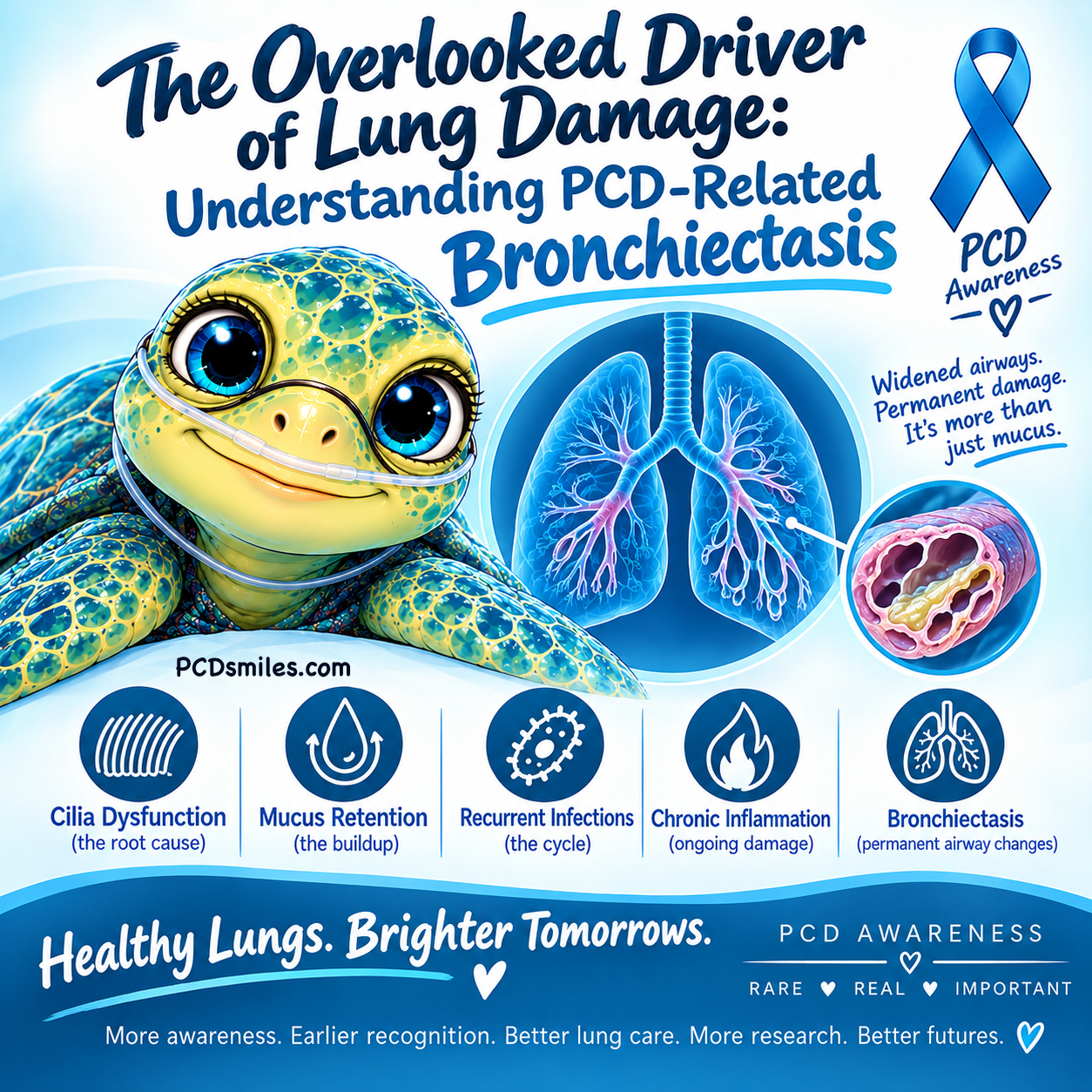
- Lungs — impaired mucus clearance and bronchiectasis
- Sinuses — chronic sinus disease
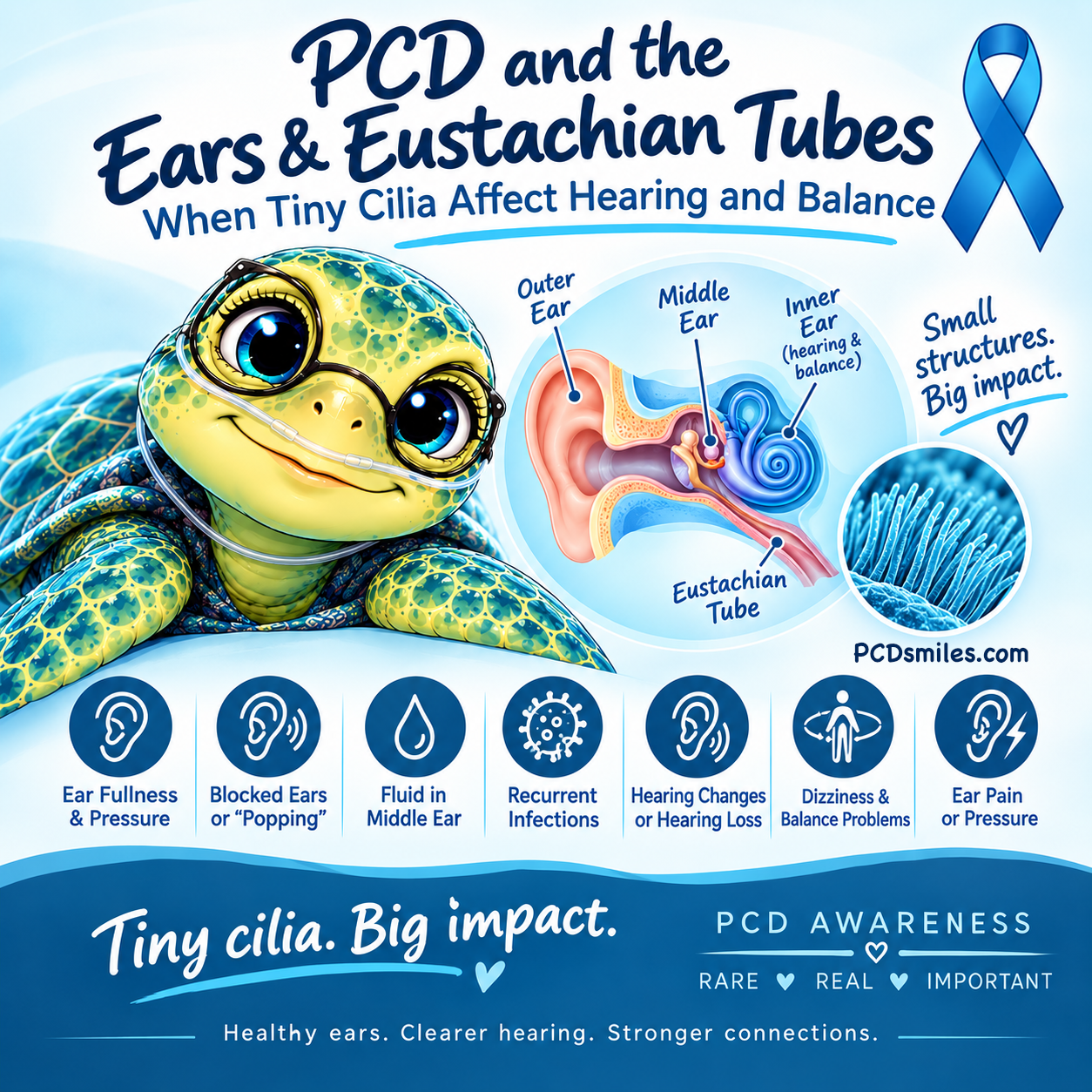
- Middle ears — chronic ear disease and hearing problems
- Heart — particularly when heterotaxy is present
- Other organs — abnormal laterality or development
- Reproductive system — impaired ciliary or flagellar function can affect fertility
The same broad biological theme—abnormal ciliary structure or movement—can have different consequences depending on where those cilia are located and what they are supposed to do.
Small cilia. Big impact.
It's easy to look at cilia and think of microscopic hairs whose only job is to sweep mucus out of the lungs.
But cilia are far more remarkable than that.
During embryonic development, specialized cilia help establish the body's left-right pattern.
If that signaling is altered, the result can be:
Situs solitus
→ typical organ arrangement
Situs inversus
→ mirror-image arrangement
Situs inversus totalis
→ essentially complete mirror-image arrangement
Situs ambiguus / heterotaxy
→ complex or mixed left-right organization
And those differences can affect much more than a medical diagram—they can influence cardiac anatomy, spleen development, intestinal positioning, and other aspects of a person's health.
Why PCD Awareness Matters
Knowing about the connection between PCD and organ lateral defects can provide an important diagnostic clue.
A person who has chronic respiratory disease plus an unusual organ arrangement or congenital heart defect may have a form of PCD that deserves investigation.
Conversely, someone with PCD may have a lateral abnormality that isn't obvious until appropriate imaging or medical evaluation is performed. Subtle abnormalities can sometimes go unnoticed without targeted assessment.
This is why PCD awareness needs to extend beyond the lungs.
PCD isn't simply about how you breathe.
It can begin with what happened before you were even born.
The same tiny structures that later help clear mucus from your airways may have played an important role in determining which side your organs developed on.
Small cilia. Big impact.
And sometimes, understanding where the organs are can help doctors understand the disease that brought you there in the first place.
Be sure to join us tomorrow for another conversation about primary ciliary dyskinesia.
Join our Facebook group Turtle Talk Café today.
We have several ways that you can donate to PCD Smiles;
- Visit Smile E. Turtle's Amazon Wishlist
- For more information on how you can donate, please visit our "Donation" page to check out our "Do & Don't policies.
- Or sponsor a PCD Smiles cheer package today!
- To shop for your “Official” turtle care ribbon gear today, visit PCD Style
Thank you for your consideration!
Medical Disclaimer
This article is intended for general educational and informational purposes only and is not a substitute for professional medical advice, diagnosis, or treatment. Infection risks and appropriate prevention strategies can vary considerably between people with PCD based on their lung health, respiratory cultures, treatments, age, and other medical conditions.
Cleaning and disinfection recommendations for respiratory equipment can also vary by device and manufacturer. Always follow the instructions provided by your healthcare team and equipment manufacturer.
Do not start, stop, or change medications, airway-clearance treatments, infection-control practices, or other aspects of your medical care based solely on this article. If you have PCD and are concerned about an infection, worsening respiratory symptoms, or possible exposure to a pathogen, contact your PCD or respiratory healthcare team for individualized guidance.
If you are experiencing severe or rapidly worsening breathing difficulties or another medical emergency, seek urgent medical attention.